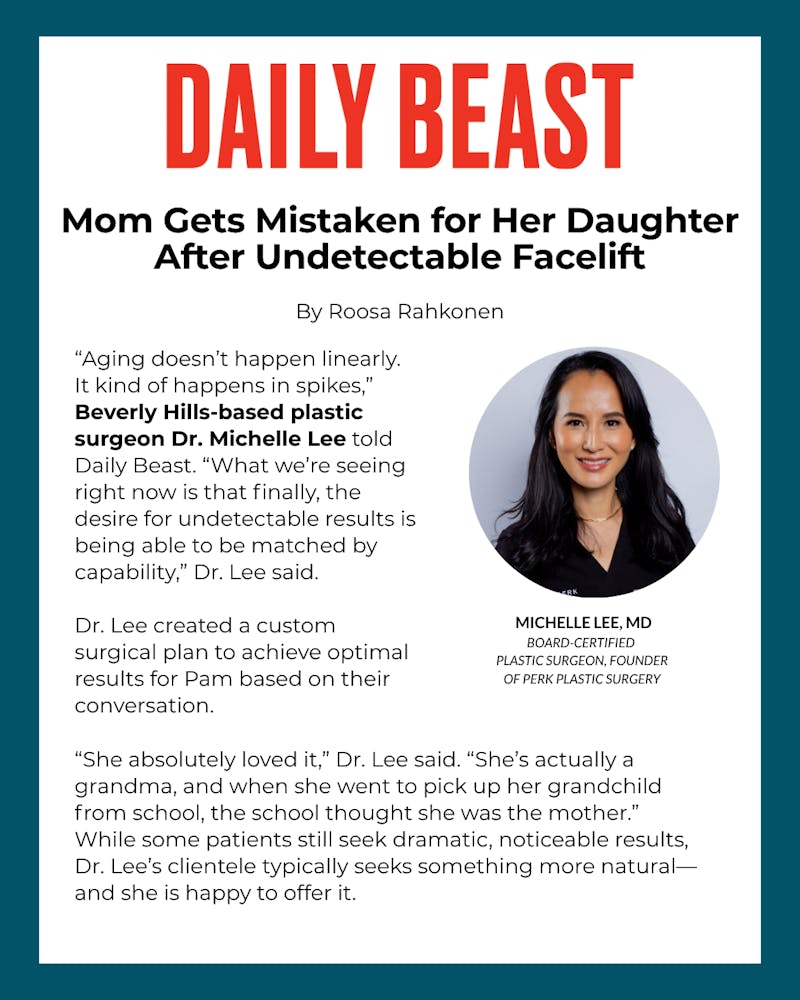
As featured in The Daily Beast
A truly undetectable facelift isn't about erasing every wrinkle. It's about artistic judgment as much as technique. It is about repositioning the deeper layers of the face back where they naturally sit, rather than simply pulling the skin tighter. Done well, the result follows a patient's own face instead of fighting it.
I was reminded of exactly why that distinction matters when I discussed natural facial rejuvenation with the Daily Beast.
The Patient: A Face That Was Aging in Spikes, Not a Slope
Like many patients I see, patients do not experience aging as a slow, even fade. Most people described waking up one year and feeling like their reflection had jumped forward two decades all at once. That's actually how aging tends to work for most people. It isn't linear. Bone density, fat volume, and skin elasticity all shift at different rates, and the change often feels sudden even when it's been building for years.
The shift showed up as heavier jowls, a jawline that had lost its definition, and eyelids and neck skin carrying more excess than she wanted to see in photos.
Why I Rarely Treat Just One Area
A face doesn't age in isolation, so I don't treat it that way. Most facial rejuvenation patients’ plan combine a few coordinated procedures rather than a single fix:
- Brow lift: to address sagging tails of the brow.
- Upper and lower blepharoplasty, to address the eyelids, which tend to age somewhat independently of the rest of the face
- Deep-plane facelift, which resets the jawline by repositioning the deeper structural layer of the face, not just tightening the skin over it.
- Fat grafting, to restore volume that naturally diminishes with age. This step gets skipped more often than it should, since a facelift alone repositions and tightens tissue but doesn't replace volume that's already been lost
Natural results come from treating the face as one connected picture, not a list of separate procedures.
The Biggest Misconception About "Youthful" Faces
Patients often assume the goal is zero wrinkles. It isn't. Even a baby's face isn't perfectly smooth. Softness and a few natural lines are part of what reads as youthful in the first place. A harmonious face isn't one with every line erased; it's one where proportion and volume are back in balance. Chasing total flatness is usually what makes a result look operated-on rather than simply well-rested.
What Actually Makes a Facelift Look Undetectable
A few things matter more than most patients realize:
Judgment matters as much as skill. Technique alone doesn't produce a natural result — it takes a trained eye for what a given face actually needs, and just as importantly, what it doesn't.
Working with the face, not against it. Rather than pulling skin tight, I reposition the deeper structures of the face back to where they naturally sit. That's what gives a result softness instead of a stretched, "done" look.
Scars that heal into shadow, not scar. Incisions belong in the creases the face already has, placed with no tension pulling on them. Tension is what causes a scar to widen or stay visible, the distortion of the earlobe and it's usually the first thing that gives a result away.
The Result
Rested and rejuvenated, but still unmistakably you. That's the outcome I aim for with nearly every surgical plan I build: not a dramatically different face, but the best, most rested version of the one a patient already has.
Frequently Asked Questions
Does an undetectable facelift still look natural years later? Yes, when it's built on repositioning the deeper facial structures rather than relying on skin tension alone. Because this approach addresses the underlying anatomy instead of just pulling the skin tighter, results tend to age more naturally with the patient rather than shifting or looking pulled over time.
What's the difference between a deep-plane and a traditional facelift? A traditional facelift primarily tightens the skin and the layer just beneath it. A deep-plane facelift releases the ligaments and repositions the deeper structural layer of the face, correcting jowls and jawline laxity at the source rather than masking it with surface tension. This produces a more natural, longer-lasting result.
Can a facelift be safely combined with eyelid surgery? Yes. Combining a facelift with blepharoplasty in a single, carefully planned surgery is common and often preferable to staging them separately, since it addresses the lower and upper face together for a more balanced result and means one recovery period instead of two.
Why doesn't a facelift restore lost facial volume? A facelift repositions and tightens existing tissue. It doesn't add volume back. Restoring the fullness that naturally diminishes with age typically requires a separate step, such as fat grafting, alongside the facelift itself.
Why doesn't a good facelift remove every wrinkle? Because total smoothness isn't what youthful faces actually look like. A harmonious, natural result comes from restoring balanced proportions and volume, not from flattening every line over-erasing wrinkles is often what makes a result look artificial rather than simply well-rested.
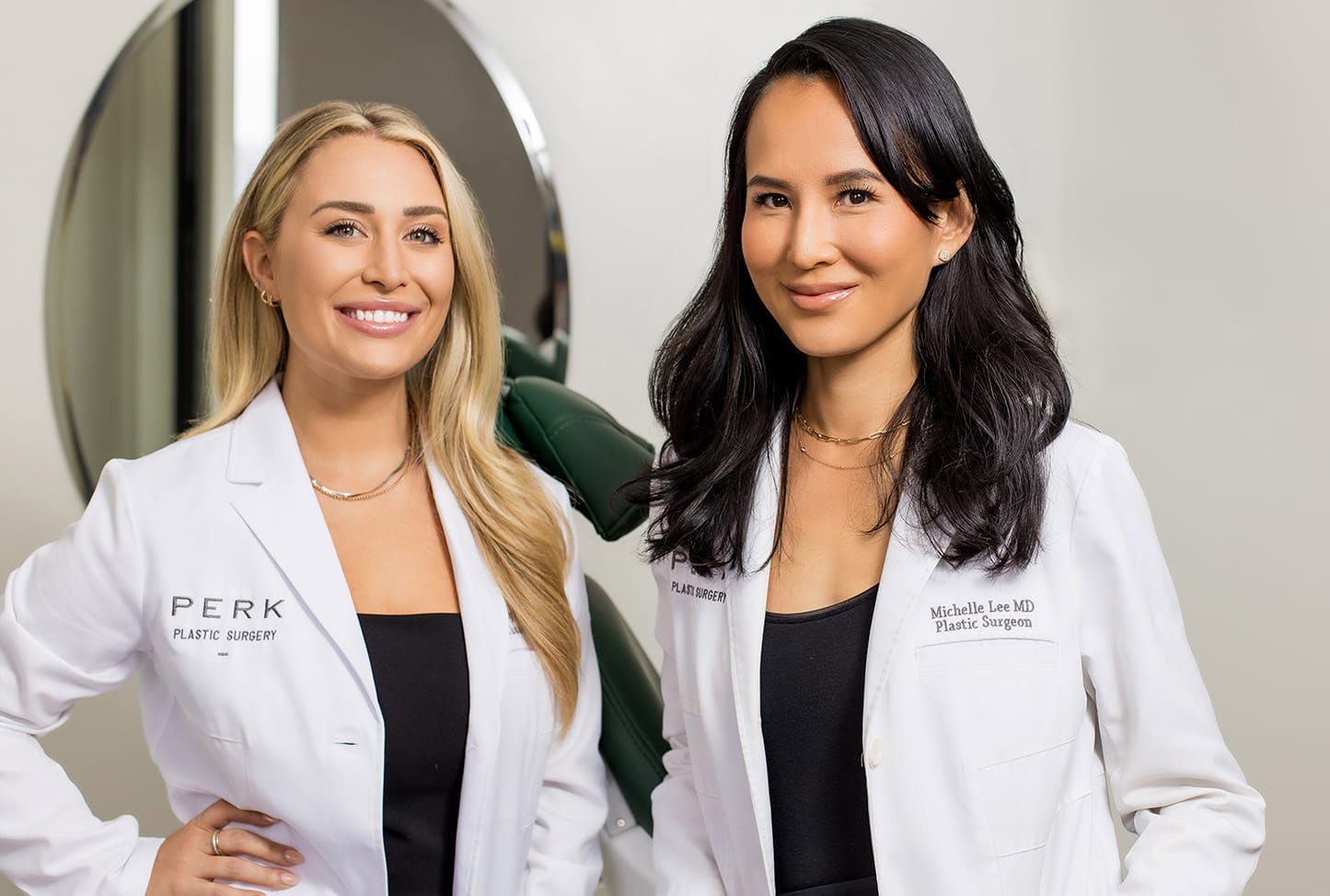
Dr. Michelle Lee is a board-certified, Beverly Hills–based plastic surgeon specializing in facelifts and necklifts, trained at Harvard and UPenn and featured on E!'s Dr. 90210. Recognized by Castle Connolly as a Top Doctor and named to Newsweek's America's Best Plastic Surgeons for Facelift (2026). Follow her work at @drmichelleleeperk.