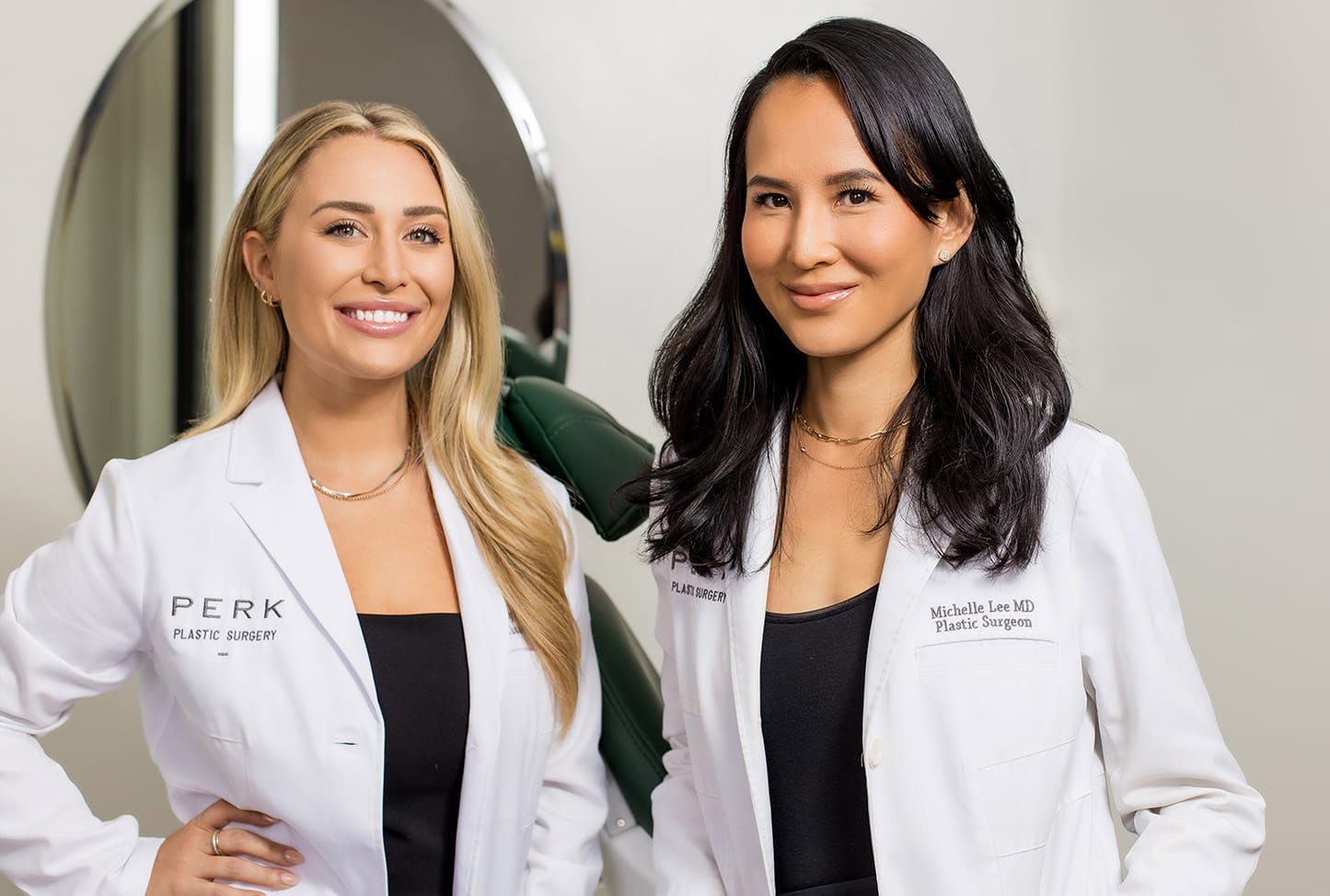
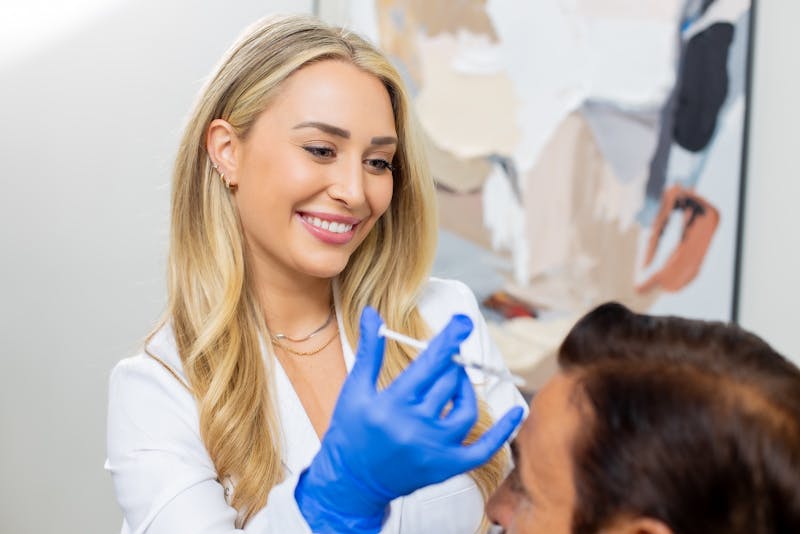
We're proud to share that Courtney Coons, FNP-BC, of PERK Plastic Surgery was recently featured in HuffPost, where she was consulted as a clinical expert on dark spot correctors and the ingredients used to treat melasma and hyperpigmentation. Read the full HuffPost feature here.
Being tapped by a major publication like HuffPost speaks to Courtney's standing as a trusted voice in non-surgical aesthetics, and the conversation she contributed to is one we hear constantly from patients: what actually works for dark spots and melasma, and why?
What Is Melasma, and Why Is It So Difficult to Treat?
Melasma is a chronic pigmentation condition that appears as irregular dark patches, most commonly on the cheeks, forehead, and upper lip. Unlike typical sun spots, melasma tends to be deeply rooted and reactive. Hormonal fluctuations (particularly from pregnancy or oral contraceptives), sun exposure, heat, inflammation, and even certain skincare products can all trigger or worsen it.
This complexity is exactly why Courtney emphasizes patient education. As she explained to HuffPost, treating melasma effectively requires understanding the full picture of what's driving the pigmentation, not just reaching for the most popular product on the shelf.
What Ingredients Actually Help with Dark Spots and Melasma?
In her HuffPost contribution, Courtney discussed the key active ingredients found in well-formulated dark spot correctors and why they work:
Niacinamide is an antioxidant that helps interrupt melanin synthesis and reduce the transfer of pigment to skin cells. It also has meaningful anti-inflammatory properties, making it a strong fit for sensitive or reactive skin.
Tranexamic acid works by blocking the signaling pathways that trigger excess pigment production, particularly in melasma. It's become one of the most sought-after ingredients for stubborn, hormonally driven discoloration.
Ethyl ascorbic acid (a stabilized form of vitamin C) brightens the skin and helps reduce the appearance of existing dark spots. Courtney noted that this form tends to be more stable than traditional L-ascorbic acid, making it more effective in real-world formulas.
These ingredients, when combined thoughtfully, can deliver meaningful results for mild to moderate discoloration. But Courtney is equally clear that ingredient awareness is only one part of the equation.
Can Over-the-Counter Products Treat Melasma?
Yes, and no. Over-the-counter products containing the ingredients above can help improve the appearance of certain forms of discoloration over time, but melasma is rarely a straightforward condition. Pigmentation influenced by hormones, inflammation, or cumulative sun damage often requires more than a single serum.
Patients are frequently surprised to learn that more is not better when it comes to treating hyperpigmentation. Overloading the skin with active ingredients or constantly switching routines can actually worsen inflammation, which then deepens discoloration. As Courtney often tells her patients, consistency and skin barrier integrity are foundational, not optional.
When Should You See a Professional for Hyperpigmentation?
If over-the-counter products haven't moved the needle after several months of consistent use, or if your pigmentation is widespread, worsening, or accompanied by skin sensitivity, it's worth consulting a licensed aesthetic professional for a more personalized approach.
At PERK Plastic Surgery, we evaluate pigmentation concerns through a comprehensive lens, considering skin type, hormonal history, existing skincare routine, and overall skin health before recommending a treatment path. That path may include medical-grade skincare, laser treatments such as those targeting melanin-based pigmentation, microneedling with skin brightening support, or a combination approach designed to address both the pigmentation itself and the underlying triggers.
What Professional Treatments Are Available for Melasma?
When over-the-counter products aren't cutting it, that's usually the signal that it's time to bring in something more targeted. At PERK, we take a layered approach to pigmentation, meaning the treatments she recommends are based on what's actually driving your discoloration, not just what's trending.
Depending on what your skin needs, that might look like:
-
BBL Hero Photofacial — think of this as a light-based reset for your skin. BBL uses intense pulsed light to break up existing pigmentation from sun damage, age spots, and uneven tone. One patient described her results after a single treatment as more clear and even skin tone, and that's pretty typical for patients who are good candidates.
-
Moxi Laser — a gentler laser option that works well for melasma-prone or sensitive skin. It encourages the skin to renew itself without the intensity of more aggressive resurfacing, making it a go-to for patients who want real results but need to ease in.
-
Fractional CO2 Laser Resurfacing — for patients dealing with more stubborn pigmentation alongside texture concerns, this treatment goes deeper, removing damaged skin layers and kickstarting collagen remodeling for a noticeably more refined complexion.
-
Chemical Peels + Medical-Grade Skincare — what you're doing at home matters just as much as what happens in the treatment room. Courtney builds out a skincare plan using professionally selected formulas, including options from the PERK Potions line, to support and extend your in-office results.
-
Microneedling — often paired with brightening serums, microneedling helps stimulate collagen while creating better absorption of active ingredients, making it a strong complement to any pigmentation protocol.
-
Customized Treatment Mapping with Aura 3D Skin Analysis — this is where it all comes together. Rather than guessing what your skin needs, Courtney uses the Aura 3D Skin Analysis to actually see what's happening beneath the surface, then maps out a treatment plan that addresses your specific triggers, whether that's sun, hormones, inflammation, or all of the above.
The goal is never to throw every treatment at the wall and see what sticks. It's to understand your skin, address the root cause, and build a plan that gets you lasting results.
About Courtney Coons, FNP-BC, PERK Plastic Surgery
Courtney Coons is a board-certified nurse practitioner and non-surgical aesthetic specialist at PERK Plastic Surgery in Beverly Hills, California. She leads all injectable and skin-based procedures for the practice, with a focus on facial balancing, preventative aesthetics, skin rejuvenation, and customized treatment planning designed to enhance natural beauty while prioritizing long-term skin health and safety.
Her feature in HuffPost reflects the kind of clinical insight she brings to every patient conversation, grounded in science, honest about what products can and cannot do, and always oriented toward what's actually right for the individual.
To learn more about Courtney's approach to skin rejuvenation, pigmentation, and customized non-surgical treatment, visit https://www.bevhills.com/ or call 310-881-8703 to schedule a consultation.