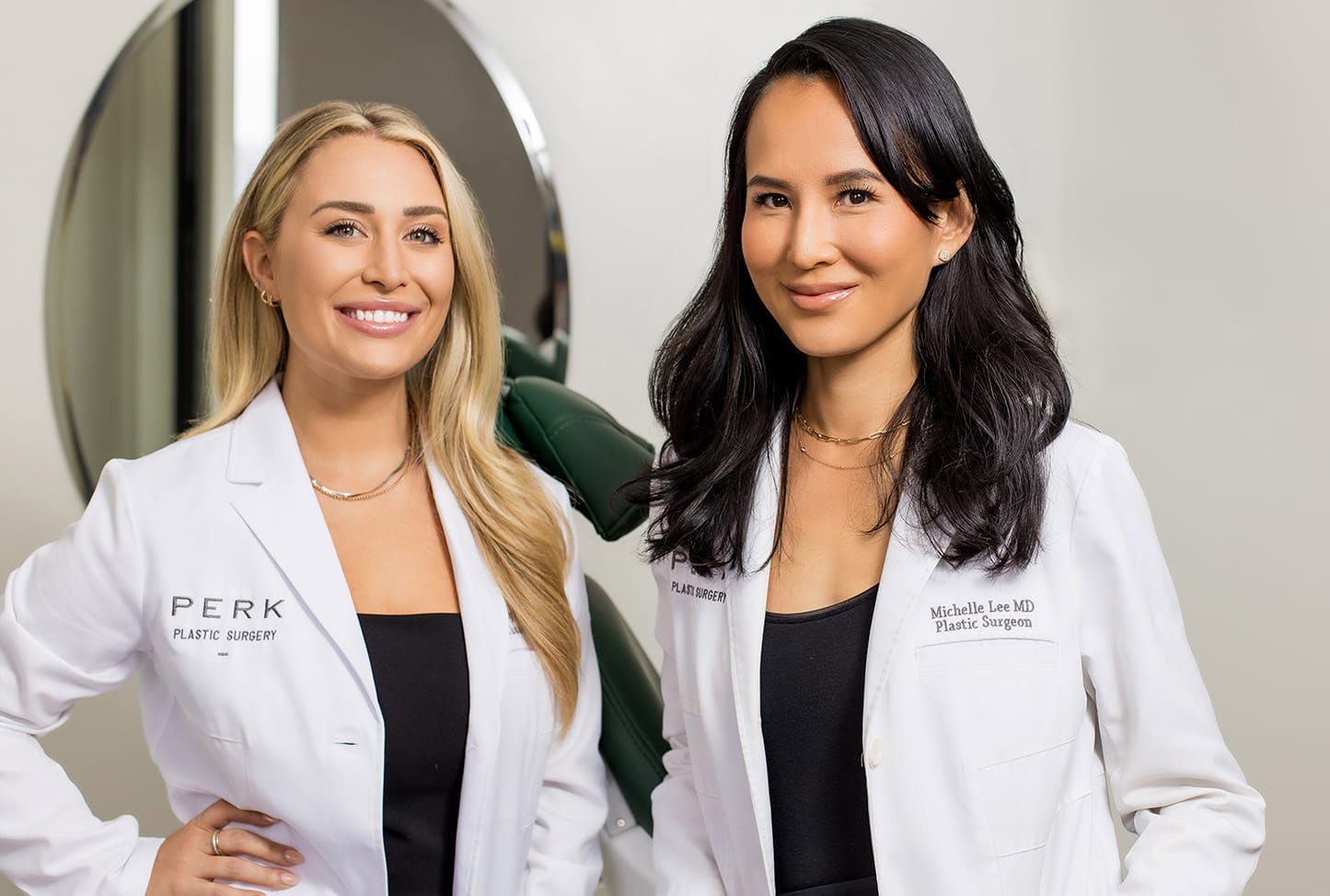

Not everyone considering fat transfer has enough of their own tissue to harvest, and that gap has driven interest in off-the-shelf donor fat products like Renuva. Processed from donated human tissue and sterilized for injection, these products restore volume in the face, hands, or body without the liposuction step traditional fat grafting requires. Dr. Michelle Lee, a Harvard-trained, board-certified plastic surgeon and founder of PERK Plastic Surgery in Beverly Hills, recently discussed this option in USA Today, explaining that off-the-shelf donor fat serves a different purpose than autologous fat transfer, which uses a patient's own fat harvested from areas such as the abdomen, flanks, or inner thighs.
Choosing between the two comes down to how much fat a patient has to work with and what they want to achieve. Here's how each option works, who tends to benefit most, and what results look like once the tissue settles.
What Is Off-the-Shelf Donor Fat?
Off-the-shelf donor fat, such as Renuva and AlloClae, comes from donated human tissue processed and sterilized for cosmetic use. Once injected, it acts as a scaffold that may support the body's own cells as they repopulate the treated area, gradually restoring volume rather than simply occupying space the way a synthetic filler does. Since no harvesting is required, treatment can happen in a single office visit.
Fat grafting has become a common tool in facial rejuvenation, addressing everything from lip volume to jawline contour.
Off-the-Shelf Donor Fat vs. Traditional Fat Transfer
Candidacy usually comes down to how much natural fat a patient has to work with:
- Off-the-shelf donor fat: Best suited to patients with little donor fat, including those who are naturally lean or have lost significant facial volume from GLP-1 medications such as Ozempic or Wegovy, a pattern now documented in plastic surgery literature.
- Traditional fat transfer: Best suited to patients with enough fat in the abdomen, flanks, or inner thighs to harvest through liposuction under sedation.
What to Expect From Traditional Fat Transfer Results
Traditional fat transfer uses living tissue, so it typically doesn't dissolve or migrate the way some fillers can once it establishes its own blood supply. Dr. Lee notes that 50% to 70% of transferred fat tends to survive long-term, and because it remains living tissue, results respond naturally to weight changes and tend to hold for five to ten years.
Swelling in the first few weeks can make the area look fuller than it will end up, followed by gradual reabsorption. Final results generally take two to three months to settle, and some reabsorption during that window is expected, not a sign anything went wrong.
Setting Realistic Expectations Before Treatment
A common misconception is that using a patient's own tissue makes fat transfer simple, or similar to getting a temporary filler. Dr. Lee is clear that autologous fat transfer remains a surgical procedure performed under sedation, carrying the same general risks, including infection and bleeding, as any surgical harvesting, though these risks are minimal. Off-the-shelf donor fat involves no incisions and a simpler recovery, though it's generally reserved for smaller, corrective areas rather than larger-volume goals.
Consistent with her philosophy of educating patients before any treatment, Dr. Lee stresses that setting expectations before treatment, not after, produces the most satisfied outcomes.
Curious About Donor Fat? Dr. Lee Can Help You Decide
Deciding between off-the-shelf donor fat and traditional fat transfer comes down to a patient's goals and how much natural volume they have to work with. As a Harvard-trained, board-certified plastic surgeon and founder of PERK Plastic Surgery in Beverly Hills, Dr. Lee has spent her career helping patients restore natural volume with techniques suited to their unique anatomy. Patients curious whether donor fat is right for them can schedule a consultation with the PERK team to discuss their options in detail.