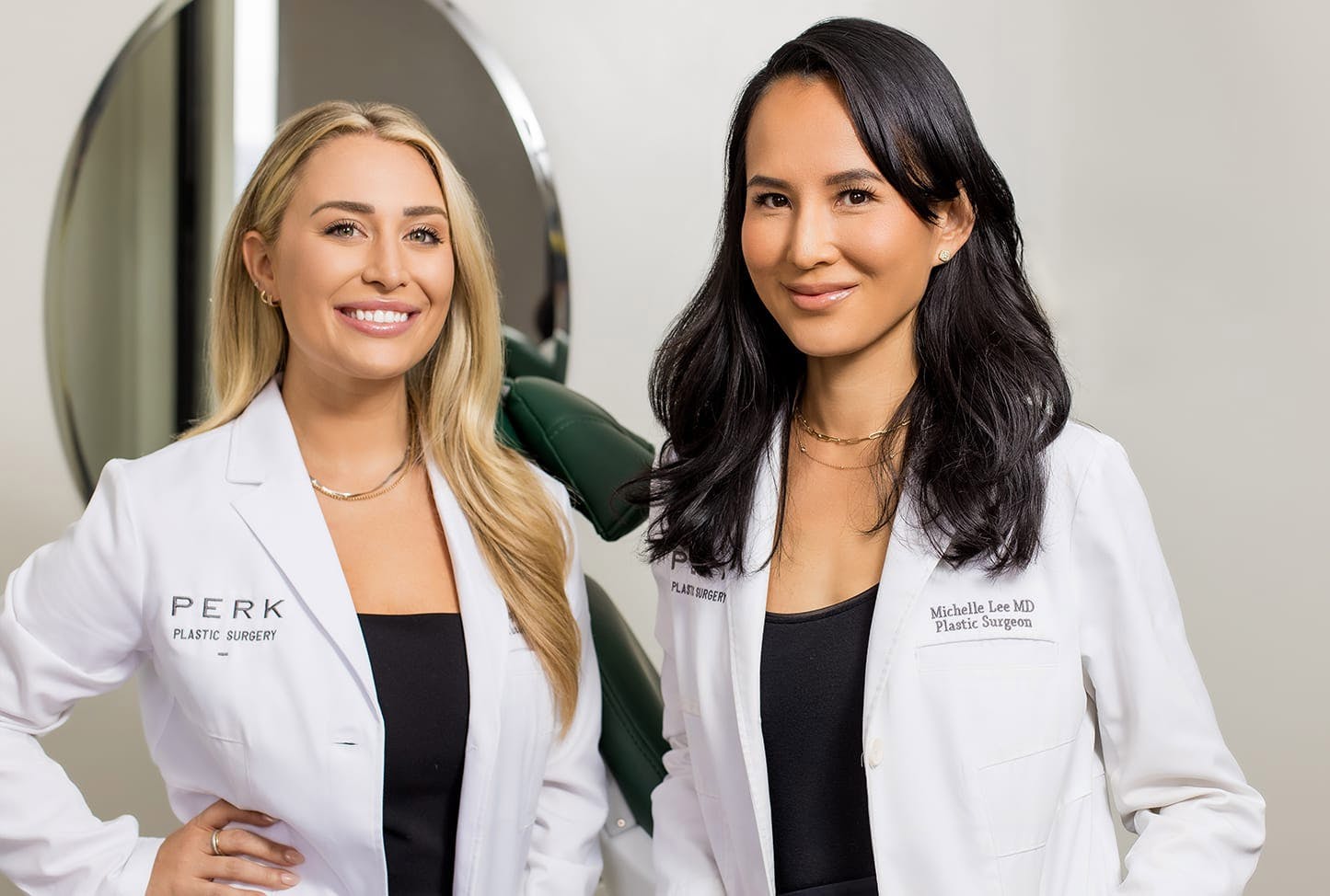

A February 2026 facial plastic surgery trends report points to a 19 percent projected rise in facial procedures nationwide, driven largely by patients seeking subtler, more strategic changes rather than dramatic transformations. Surgeons interviewed for the report describe a landscape shaped by AI-generated beauty standards, viral surgical requests, and a new wave of patients whose faces have changed rapidly due to GLP-1 weight loss. Dr. Michelle Lee, a Harvard-trained, board-certified plastic surgeon and founder of PERK Plastic Surgery in Beverly Hills, was among the surgeons who weighed in on where these shifts are heading.
Dr. Lee's perspective, shaped by decades of facial rejuvenation experience and her commitment to natural, anatomy-first results, offers a useful lens on what these trends actually mean for patients. This blog walks through eight of them.
1. AI Photos Are Reshaping Consultations, Not Always for the Better
Patients increasingly bring AI-generated reference images to consultations, but surgeons warn against treating them as surgical blueprints. Real results depend on actual anatomy, not a filtered image. Expectations set outside an in-person consultation often disappoint. PERK begins every surgical plan with understanding a patient's unique proportions and goals in person.
2. Lip Augmentation Patients Want Restraint, Not Volume
Maximum lip volume is falling out of favor. Patients ask more about longevity and placement to avoid an overfilled look. The choice depends on how long you want results to last and your preference for surgical or nonsurgical options:
- Lip flip: A neuromodulator like BOTOX softens the upper lip's curl. Results last 8-12 weeks.
- Dermal filler: Long-term, nonsurgical fullness. Most patients return periodically for touch-ups.
- Lip lift: The most permanent surgical option, typically tried after filler or lip flip.
3. "Elf Ear" Requests Are Testing Surgeons' Judgment
Elf ear procedures have gained social media traction, but Dr. Lee has warned about the risks. Even subtle ear changes cause lasting asymmetry, visible scarring, or contour irregularities that are hard to reverse. Declining procedures that don't harmonize with a patient's face, including elf ears, protects natural-looking outcomes.
4. A Sharper Jawline Is Driving Interest in Gland Contouring
Social media's obsession with sharp neck contours has pushed submandibular gland reduction into focus. These glands descend with age and create jawline fullness. Dr. Lee explains that partial reduction, performed safely to preserve function, restores contour. Published research supports this as part of neck and facelift procedures when done selectively.
5. The Celebrity "Natural Look" Remains a Contradiction
Public figures often present a "natural" appearance that quietly involves cosmetic work. Dr. Lee notes that anyone with resources can find a surgeon willing to perform nearly any procedure. She evaluates a face holistically, seeing how features connect and support each other, producing results that read as natural.
6. GLP-1 Weight Loss Is Bringing Younger Patients to Facial Rejuvenation
Rapid GLP-1 weight loss is shifting who seeks facial rejuvenation. Patients in their thirties and forties now experience volume loss and skin laxity accelerated by fast weight change. The American Academy of Ophthalmology has documented this trend. PERK views aesthetic care as part of a wellness lifestyle, including nutrition, exercise, and self-care, not an isolated procedure.
7. Revision Rhinoplasty Grows More Complicated With Age
Rhinoplasty remains frequently revised. Dr. Lee attributes this to countless variables outside a surgeon's control. Thinning skin, scar tissue from prior surgery, and age-related changes compound complexity. Restoring softness to an already-altered nose is especially demanding.
8. Patients Want Individuality, Even as Social Media Pushes Templates
Surgeons describe patients who actively avoid practices known for a signature look. They want results that don't announce themselves as surgery. PERK's philosophy: every facial procedure is designed around unique anatomy, not a formula. Natural results come from intentional design.
Dr. Lee and PERK Plastic Surgery: Staying Ahead of the Trends
These trends point to one theme: patients want more information and options, but ultimately ask for a version of themselves that looks rested and unretouched, not different. Dr. Lee's Harvard training and facial rejuvenation expertise shaped a practice around exactly that. To discuss a personalized facial rejuvenation plan, schedule a consultation with PERK Plastic Surgery.